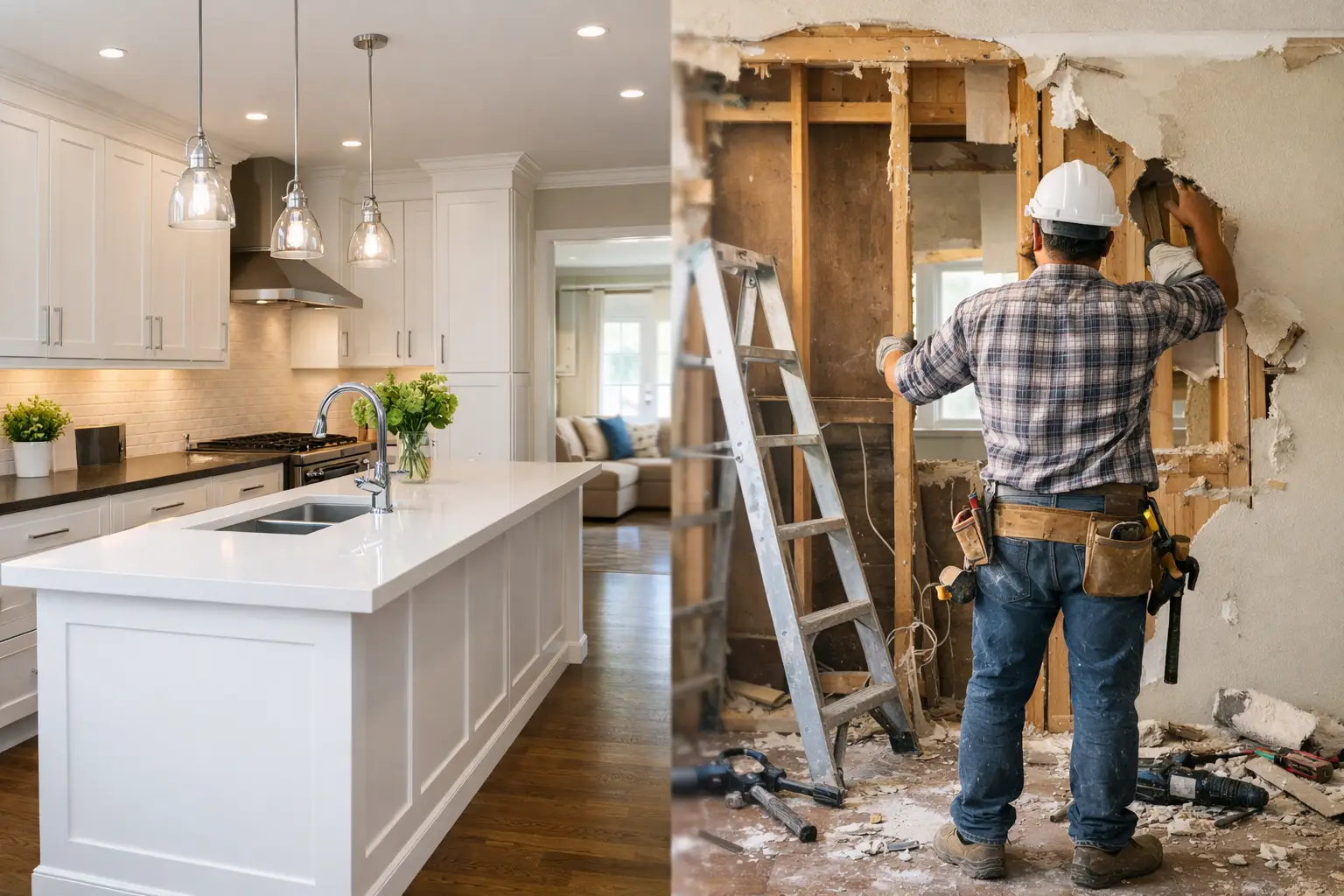
If you are planning a home project and keep hearing both terms, you are not alone in asking what is the difference between home remodeling and home renovation. Homeowners often use them interchangeably, but they do not always mean the same thing. That distinction matters, because the word you use can shape your budget, timeline, permits, and expectations from the start.
In simple terms, renovation usually means restoring or updating what is already there. Remodeling usually means changing the structure, layout, or purpose of a space. Both can improve comfort, appearance, and value, but they involve different levels of planning and construction.
What Is the Difference Between Home Remodeling and Home Renovation?
A renovation keeps the basic bones of the room or home in place while improving its condition or appearance. Think of replacing worn flooring, updating old cabinets, repainting walls, installing new fixtures, or refreshing an outdated bathroom without moving plumbing. The goal is often to make the space look better, function better, or feel more current without drastically changing how it is built.
A remodel goes further. It changes the space itself. That could mean removing walls for an open kitchen, reworking a bathroom layout, converting a tub into a walk-in shower, building a sunroom, or adding square footage with a home addition. Remodeling often involves structural work, electrical changes, plumbing relocation, and a more involved design process.
That is the clearest answer to what is the difference between home remodeling and home renovation: renovation updates, while remodeling transforms.
Why the Difference Matters Before You Start
For many homeowners, the first concern is cost. In most cases, renovation is more budget-friendly because it works within the existing layout and systems. You may still invest significantly depending on materials and finishes, but you are less likely to pay for major demolition, engineering, or utility relocation.
Remodeling tends to cost more because it asks more of the house. When walls move, plumbing shifts, or additions go up, labor increases and planning becomes more detailed. There is also more room for hidden conditions to appear once work begins, especially in older homes.
Timeline is another big factor. A renovation can often move faster because the work is more straightforward. A remodel usually takes longer, not just because of construction, but because there may be design revisions, inspections, permits, and ordering lead times for custom materials.
This is also where homeowner expectations can drift. Someone may say they want a “bathroom renovation” when what they really want is a larger shower, moved fixtures, and improved accessibility. That is closer to a remodel. Starting with the right definition helps create a more accurate plan from the beginning.
How Renovation Looks in Real Life
A home renovation is often the right choice when the layout still works, but the finishes or features do not. Maybe your kitchen cabinets are dated, your deck boards are weathered, or your bathroom feels stuck in another decade. If the room functions well enough and your goal is to refresh it, renovation may be the practical path.
For example, a bathroom renovation might include a new vanity, updated lighting, fresh tile, a modern toilet, and improved paint and trim. The room can feel dramatically different, even though the sink, toilet, and shower stay in the same places.
The same applies outdoors. A deck renovation could involve replacing damaged boards, upgrading railings, improving stairs, and refreshing the overall look without rebuilding the entire structure from scratch. The project still adds comfort and value, but the scope stays more controlled.
Renovation makes a lot of sense when you want visible improvement without turning your home upside down.
How Remodeling Looks in Real Life
Remodeling is often the better fit when the problem is not just age or style, but the way the space works. If your kitchen feels closed off, your bathroom is too tight, or your home no longer suits your family, a remodel can solve issues that cosmetic updates cannot.
A kitchen remodel might remove a wall, add an island, reconfigure appliance locations, and improve storage flow. A bathroom remodel might expand the footprint, convert a standard shower to a barrier-free entry, or create a better layout for aging in place. A basement or sunroom project can turn underused space into part of everyday living.
This kind of work often has the biggest effect on daily life because it changes how the home supports you. It is not just about finishes. It is about function.
Renovation vs. Remodeling: It Is Not Always Either-Or
Some projects include both. In fact, many of the best home improvement plans do.
You might renovate one part of the room while remodeling another. For example, in a bathroom project, you could keep the existing footprint but still widen a doorway for better accessibility. In a kitchen, you might preserve the layout but add a larger opening to connect the space with a dining room. These hybrid projects are common because real homes rarely fit neat labels.
That is why a consultation matters. The most useful starting point is not the word itself, but the outcome you want. Do you need a fresher look, a safer setup, more usable space, or all three? Once those goals are clear, the right scope becomes easier to define.
Which Option Adds More Value?
Both can add value, but value depends on what your home needs and what buyers in your area expect.
A renovation can offer a strong return when it updates worn or outdated areas that drag down the home’s appeal. Fresh bathrooms, improved decks, updated finishes, and modernized living spaces often make a home feel well cared for. That matters whether you plan to sell soon or stay for years.
A remodel can create even greater long-term value when it solves a functional problem. Adding a bathroom, improving accessibility, finishing useful space, or creating a better floor plan can make a home work for your family now and stand out later. Still, bigger spending does not automatically mean better return. The smartest investment is one that matches your neighborhood, your goals, and your home’s condition.
How to Decide What Your Home Needs
Start by asking a few practical questions. Is the room simply outdated, or does it actively frustrate you? Are you happy with the layout? Do you need more accessibility, better storage, or easier traffic flow? Are you trying to make cosmetic improvements, or do you need the space to perform differently?
If the answer is mostly about appearance and basic upgrades, renovation may be enough. If the answer involves movement, comfort, safety, or a different use of space, remodeling is probably the better fit.
It also helps to think about how long you plan to stay in the home. If this is your long-term residence, a remodel may be worth the extra investment because it improves everyday living in a lasting way. If you want to update a home before listing it, a renovation might be the more efficient move.
Budget matters too, but it should not be the only filter. Sometimes homeowners try to force a renovation budget onto a remodeling problem. That usually leads to temporary fixes instead of real solutions.
Work With a Contractor Who Clarifies the Scope
One reason these terms get confusing is that different contractors use them differently. What matters more than labels is whether your contractor takes the time to define the work clearly, explain what is changing, and outline what that means for price, schedule, and disruption.
A dependable contractor should be able to walk you through trade-offs. Can the space be improved without moving plumbing? Would a small layout change make a big difference? Is an addition necessary, or can existing square footage be used better? Those are the conversations that protect your investment.
For homeowners in the Richmond area, that kind of guidance is often what makes a project feel manageable instead of overwhelming. Old Dominion Innovations approaches these decisions with a practical, consultation-first mindset because the right answer is not always the biggest project. It is the one that fits your home, your priorities, and the way you actually live.
When you hear the terms renovation and remodeling, think less about industry vocabulary and more about purpose. If you are refreshing what already works, you are likely renovating. If you are changing the way the space works, you are likely remodeling. The right project starts when those goals are honest, clear, and built around real life.