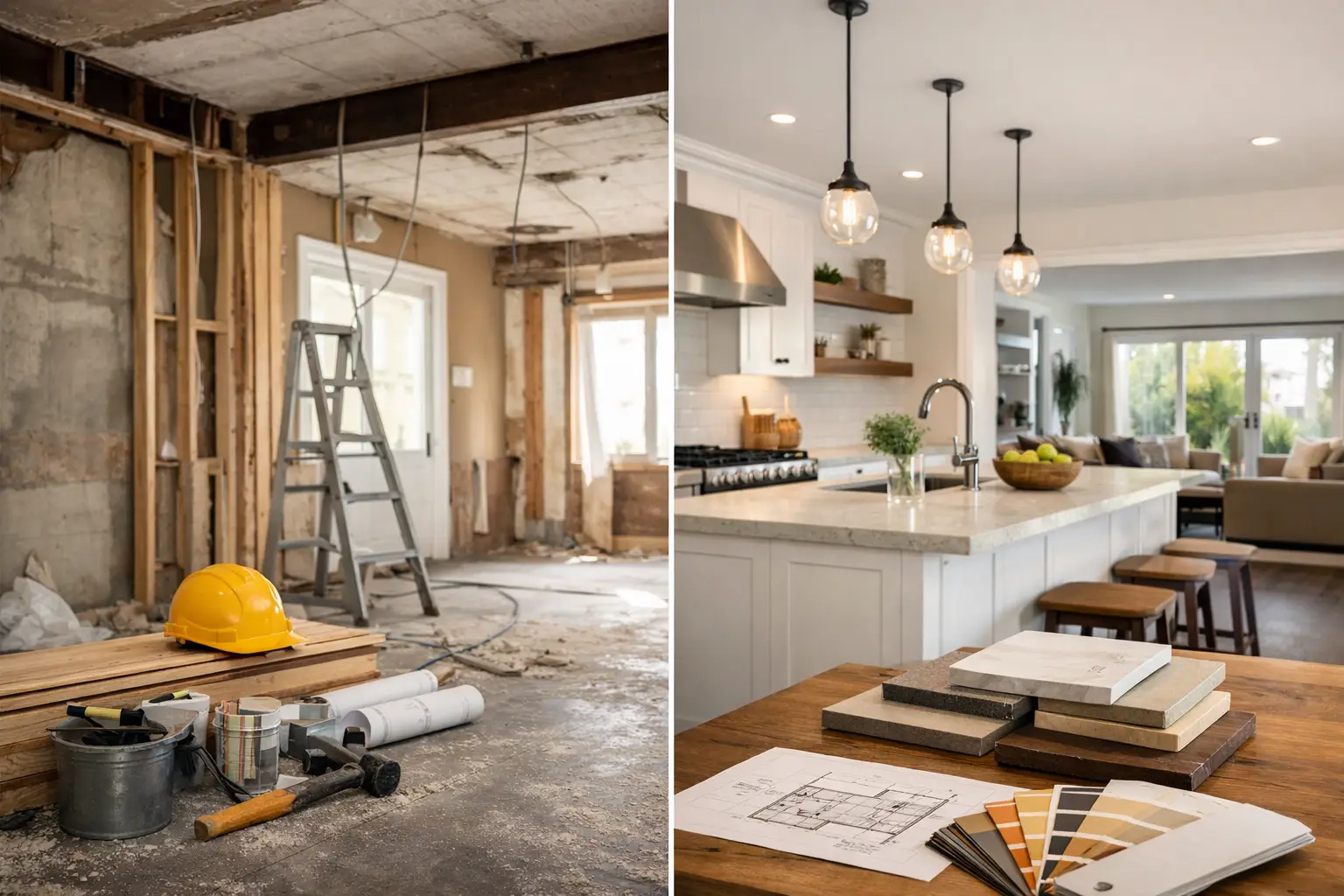
If you are planning changes to your house, the choice between home renovation vs remodel affects more than wording. It can change your budget, timeline, permits, design decisions, and how disruptive the project feels while you are living in the home. For Richmond-area homeowners, that distinction matters because the right approach can improve daily life without creating unnecessary cost or construction.
Many people use renovate and remodel as if they mean the same thing. In casual conversation, that is common. In practice, they usually point to two different levels of work.
A renovation generally means restoring, updating, or improving what is already there. The layout stays mostly the same, but finishes, fixtures, materials, and worn-out elements are replaced or refreshed. Think of replacing old flooring, updating a bathroom vanity, retiling a shower, refinishing a deck, or modernizing a dated kitchen without moving walls or plumbing lines.
A remodel usually means changing the structure, function, or layout of a space. That could involve removing walls, reconfiguring a bathroom, expanding a kitchen, building a sunroom, creating an open-concept living area, or converting a room for accessibility needs. The core question is simple: are you improving the existing space, or are you changing how it works?
Home renovation vs remodel: the real difference
The clearest way to separate the two is to look at function. If a project keeps the room doing the same job and mostly in the same footprint, it is usually a renovation. If the project changes the room’s use, flow, or structure, it is usually a remodel.
For example, replacing a tub, vanity, tile, and lighting in the same bathroom layout is a renovation. Moving the shower, expanding into a nearby closet, and changing the room’s configuration is a remodel. Updating deck boards and railings can be a renovation. Enlarging the deck, adding new features, or changing the access points leans into remodeling.
This matters because remodeling typically requires more planning, more trades, and more decisions earlier in the process. It also brings greater potential for permit requirements, hidden conditions behind walls, and schedule shifts if structural changes are involved.
That does not mean renovation is always simple. Older homes in Richmond and surrounding areas can still reveal moisture damage, outdated wiring, or framing issues once finishes are removed. But in general, a renovation is more predictable because the bones of the space stay largely intact.
Which option costs more?
Most of the time, remodeling costs more than renovating. Structural changes, layout revisions, plumbing relocations, electrical updates, and engineering requirements all add labor and material expense. The project also tends to take longer, which can affect temporary living arrangements or how long key rooms stay out of service.
Renovation can be more budget-friendly because it focuses on improving what already exists. That makes it a strong choice when the layout works well, but the materials, style, or condition no longer meet your needs. A bathroom with a good footprint but outdated finishes may not need a full remodel to feel better, function better, and add value.
Still, there are situations where remodeling is the better financial decision. If a poor layout causes daily frustration, or if a space no longer fits your household, spending money on cosmetic updates alone may only delay a larger fix. A kitchen that lacks storage, traffic flow, and usable workspace may need more than new cabinets or countertops. In that case, renovating around a bad layout can feel like money spent in the wrong place.
The right choice depends on whether you are solving a surface problem or a function problem.
When a renovation makes more sense
Renovation is often the better fit when your goal is to refresh, repair, or modernize without changing the structure of the home. Homeowners commonly choose this route when finishes are worn, styles are dated, or certain features no longer feel comfortable or safe.
This can be the smart move for bathrooms that need updated tile, improved lighting, a better vanity, or a cleaner and more durable shower setup. It also works well for deck restoration, replacing aging materials, updating railings, or improving outdoor surfaces without redesigning the entire structure.
Renovation is also practical when you want less disruption. If your family is living in the house during the project, keeping the layout intact can simplify the work. It may reduce demolition, shorten timelines, and limit the domino effect that often comes with moving plumbing, reframing walls, or altering major systems.
For homeowners thinking about resale, renovation can be a strong value move when the house already has a desirable layout. Clean, updated spaces usually appeal to buyers, especially when the work improves appearance and condition without overcomplicating the project.
When a remodel is worth it
Remodeling makes more sense when your home no longer supports how you live. That might mean a closed-off floor plan that feels cramped, a bathroom that is too small for aging-in-place needs, or an underused area that could become much more functional.
This is often where the biggest lifestyle improvements happen. A remodel can create better storage, improve traffic flow, add usable square footage, or make a home safer and easier to navigate. If a family member needs wider access, a low-threshold shower, or a more practical room arrangement, remodeling may offer a better long-term result than trying to work around an outdated layout.
Additions, sunrooms, major kitchen reconfigurations, and accessibility conversions all fall into this category. These are projects where function leads the conversation. The goal is not only to make the home look better, but to make it work better every day.
A remodel also makes sense when you plan to stay in the home for years. If this is your primary residence and the existing setup consistently falls short, investing in a more thoughtful layout can pay off in comfort, convenience, and long-term satisfaction.
Permits, planning, and why the distinction matters
One practical reason homeowners should understand home renovation vs remodel is permitting. Cosmetic updates may not require the same level of approval as structural or system changes. Once you start moving walls, rerouting plumbing, updating electrical service, or changing how a space is built, the project often enters a different category.
That affects planning from the start. Remodeling usually requires more detailed scope development, more precise budgeting, and clearer sequencing among trades. It may also require inspections at multiple stages.
For homeowners, that is another reason not to choose based on labels alone. A contractor should help define the actual scope, explain what approvals may be needed, and identify where hidden conditions could affect cost. Good planning reduces surprises. It also protects the quality and safety of the finished work.
How to decide what your home actually needs
Start with the problem, not the finish materials. Ask yourself what is driving the project. If you mainly want a cleaner look, updated surfaces, and better condition, renovation may be enough. If you are frustrated by layout, storage, accessibility, or lack of usable space, remodeling is probably the more honest answer.
It also helps to think in terms of daily life. Are you trying to make the room look current, or are you trying to change how your household moves through it? A beautiful update will not fix a layout that still causes bottlenecks, wasted space, or safety concerns.
Your timeline, budget, and long-term plans matter too. If you need a cost-conscious improvement with strong visual impact, renovation can deliver a lot. If you plan to remain in the home and need it to function differently, remodeling may provide better value over time even with a higher upfront cost.
Home age matters as well. In older homes, what starts as a renovation can reveal underlying issues that nudge the project toward more involved work. That is why realistic expectations and a clear consultation process matter so much. An experienced contractor can spot where a straightforward update is realistic and where the existing conditions suggest a deeper approach.
For many homeowners in Richmond, Henrico, Hanover, Mechanicsville, Ashland, and Glen Allen, the best projects are the ones that balance appearance with real-life use. That is especially true in bathrooms, outdoor living spaces, additions, and accessibility upgrades, where design choices need to support comfort and durability, not just style.
Old Dominion Innovations works with homeowners on both sides of that decision, helping define whether a space needs a refresh or a more substantial change. That kind of guidance matters because the right scope can protect your investment and keep the project aligned with your goals.
If you are weighing renovation against remodeling, the best next step is to be honest about what is no longer working in your home. Once that is clear, the right path usually becomes easier to see.