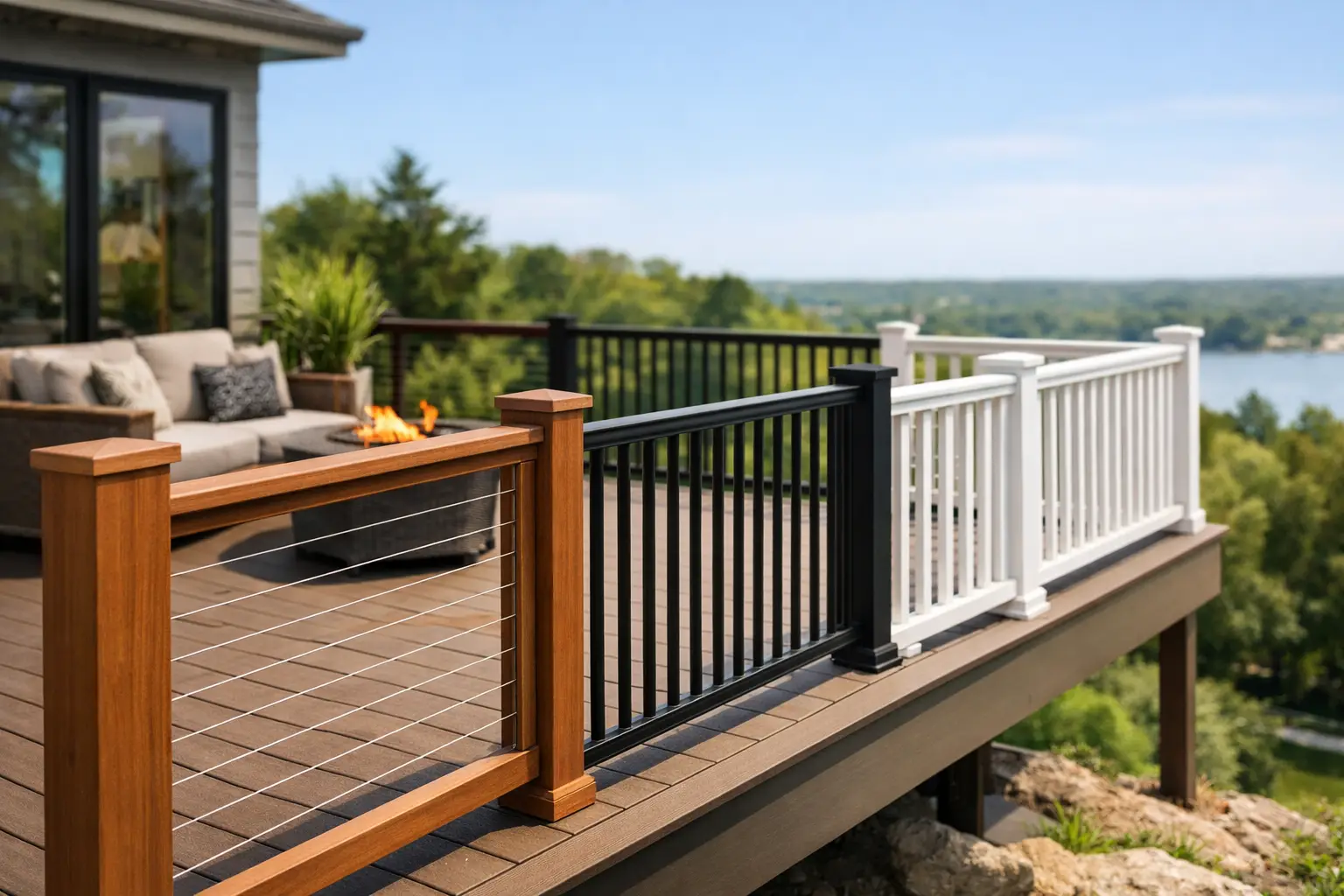
A deck can feel finished or unfinished based on one decision: the railing. Homeowners comparing the best deck railing options are usually balancing three things at once – safety, appearance, and how much maintenance they want to deal with a few seasons from now. That balance matters even more when your deck is a real extension of your living space, not just a platform in the backyard.
The right railing should make your deck safer, fit the style of your home, and hold up to Virginia weather without becoming a constant chore. Some materials look beautiful on day one but ask for more upkeep than expected. Others are easy to maintain but may not give you the warmth or character you want. The best choice depends on how you use your outdoor space, who uses it, and what kind of long-term investment you want to make.
What matters most when choosing deck railing
Before comparing materials, it helps to think about how the railing will perform in daily life. Families with children or pets often care most about spacing, durability, and climb resistance. Homeowners planning to age in place may want a railing that feels solid in the hand and adds confidence on stairs. If your deck overlooks a yard, pool, or wooded area, preserving the view may be just as important as matching the architecture of the house.
Budget matters too, but it should be looked at over time. A lower upfront price can become more expensive if the railing needs frequent painting, sealing, or repairs. A higher initial investment can make sense if it saves maintenance and keeps its appearance for years.
Best deck railing options by material
Wood railing
Wood remains one of the most familiar deck railing choices, and for good reason. It offers a classic look that works well with traditional homes, painted exteriors, and older neighborhoods where a natural or craftsman-style finish feels appropriate. It is also one of the easier materials to customize, whether you want simple square balusters, decorative post caps, or a more substantial built-up design.
The trade-off is maintenance. In Virginia’s humidity, rain, and summer sun, wood needs regular attention to stay in good condition. That usually means staining or painting, checking for rot, and keeping an eye on fasteners and joints as the seasons change. If you love the look of real wood and do not mind periodic upkeep, it can still be an excellent option. If you want a railing you can mostly leave alone, wood may start to feel demanding.
Composite railing
Composite railing is a strong choice for homeowners who want a cleaner, low-maintenance solution. It is designed to resist many of the issues that affect natural wood, including splitting, warping, and frequent refinishing needs. It also pairs well with composite decking, which makes it appealing for full deck renovations where consistency matters.
The look has improved significantly over the years, but it still feels more manufactured than real wood to some homeowners. That is not necessarily a drawback – many people prefer the uniform finish and predictable performance. Composite usually costs more upfront than basic wood, but it often reduces maintenance costs and labor over time.
Vinyl railing
Vinyl railing is popular because it is affordable, clean-looking, and relatively easy to maintain. It does not need painting and generally holds up well with routine washing. For homeowners who want a bright, finished appearance without a lot of upkeep, vinyl can be a practical fit.
Its main limitation is aesthetic flexibility. Vinyl tends to offer fewer high-end design variations, and on some homes it can look less custom than other materials. It can also become brittle over time depending on exposure and product quality. For a straightforward, budget-conscious deck upgrade, vinyl can work well, but it may not be the best match if you want a more refined or architectural look.
Aluminum railing
Aluminum railing has become one of the most dependable modern options, especially for homeowners who want strength with very little maintenance. It resists rust, performs well in changing weather, and provides a clean, slim profile that does not visually crowd the deck. That slimmer profile is a major advantage if you want to keep sightlines open to your yard or surrounding landscape.
From a style standpoint, aluminum works especially well on contemporary homes, updated traditional exteriors, and elevated decks where view matters. It can feel less warm than wood, but many homeowners see that as a fair trade for durability and ease of care. It also tends to be a strong option for stairs and high-traffic areas because of its rigidity.
Cable railing
Cable railing is often chosen for the view. If your goal is to make the railing almost disappear, this is one of the best deck railing options to consider. It uses horizontal cables between posts, creating a modern appearance with minimal visual obstruction. For backyards with mature trees, water views, or open sightlines, cable systems can completely change how spacious a deck feels.
That said, cable railing is not the best fit for every home. It leans modern, and while it can be paired with wood or metal frames, it still has a distinctly contemporary look. It also needs proper installation and tensioning to perform as intended. In households with small children, some homeowners hesitate because horizontal cables can appear ladder-like, even when code requirements are met. It is a beautiful option, but one that benefits from thoughtful planning.
Glass panel railing
Glass panel railing offers the most open view of all. It is especially appealing on premium decks, raised outdoor living spaces, and homes where the scenery is part of the experience. Glass creates a polished, upscale look and can make a deck feel larger and brighter.
The obvious trade-off is maintenance and cost. Glass needs cleaning to stay attractive, especially if pollen, rain spotting, or fingerprints are an issue. It also tends to be one of the more expensive railing systems. For homeowners who prioritize visibility and a higher-end finish, glass can be worth it. For others, the upkeep may outweigh the visual benefit.
How to choose the best deck railing options for your home
The best railing is not just about material. It is about how the deck fits into your everyday life. If you host often, durability and low maintenance may matter more than having the most custom look. If your deck is visible from the street, style and curb appeal may carry more weight. If this is part of a larger accessibility-minded renovation, hand feel, stair stability, and overall safety become even more important.
Your home’s architecture should guide the decision as well. A stately brick colonial in the Richmond area may look best with classic wood or a refined aluminum profile, while a newer home with clean exterior lines may be better suited to cable or composite. Matching the railing to the house matters because the deck should feel like it belongs there, not like it was added as an afterthought.
It is also smart to think about maintenance honestly. Many homeowners start out willing to stain or paint every few years, then find that real life gets in the way. If you already know exterior upkeep is not something you want on your calendar, choosing a lower-maintenance system from the start can prevent frustration later.
Safety, code, and installation quality
Even the best material will disappoint if the installation is poor. Railings need to feel secure, meet local code requirements, and be built for the height and layout of the deck. Post attachment, baluster spacing, stair transitions, and graspable handrails all affect safety. These are not details to improvise.
This is where experienced planning matters. A well-built railing should feel solid every time someone leans on it, climbs the stairs, or moves across the deck with guests, groceries, or kids in tow. That confidence comes from proper construction, not just attractive materials.
For homeowners in Richmond, Henrico, Hanover, Mechanicsville, Ashland, and Glen Allen, local weather should also be part of the conversation. Heat, moisture, seasonal debris, and sun exposure all influence how a railing will age. A good recommendation should account for those realities, not just what looks good in a catalog.
A practical way to narrow it down
If you want classic character and do not mind maintenance, wood is still a strong choice. If you want a polished look with less upkeep, composite and aluminum are often the most practical middle ground. If preserving the view is the priority, cable or glass may be worth the added cost. If budget comes first, vinyl may offer the simplest path to a clean, finished deck.
What matters most is choosing a railing that fits how you live. At Old Dominion Innovations, that is often the starting point of any deck conversation – not just what looks best, but what will serve the home well for years. The right railing should make your outdoor space feel safer, more usable, and more complete every time you step outside.