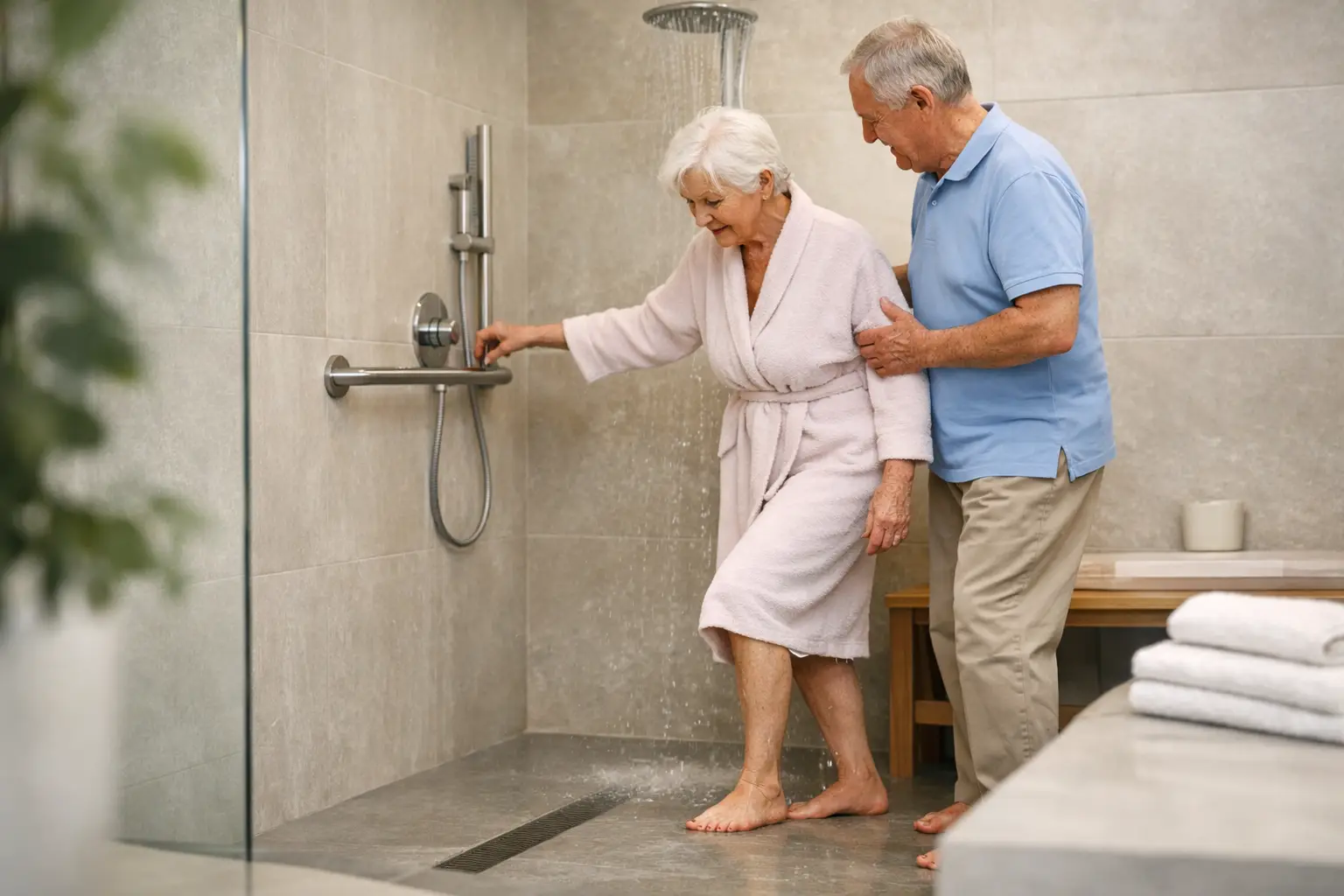
A raised shower threshold can become a daily worry long before it becomes an actual fall. For a senior who has started using a cane, feels unsteady after surgery, or simply wants to remain comfortably at home, stepping over even a low curb can feel risky. So, are curbless showers safe for seniors? When they are properly designed and installed, they can be one of the safest and most practical bathroom upgrades available.
The key phrase is properly designed. Removing the curb does not automatically create a safe shower. Safety comes from the full system: a floor that provides traction, drainage that keeps water where it belongs, sturdy support features, thoughtful dimensions, and a layout that works for the person using it every day.
Why a curbless shower can be safer
A curbless shower has no raised lip at the entrance. Instead, the shower floor transitions gradually from the bathroom floor into the wet area. That level entry eliminates a common tripping point and makes it easier to enter with a walker, transfer bench, or wheelchair if mobility needs change later.
For many Richmond-area homeowners, this is as much about confidence as it is about accessibility. A person who worries about catching a toe on the shower curb may rush, grab an unstable towel bar, or avoid bathing independently. A level-entry shower removes one obstacle and creates more usable room to move.
Curbless designs also offer a clean, updated appearance. They can make a smaller bathroom feel more open while supporting an aging-in-place plan that does not look institutional. That balance matters to homeowners who want a bathroom that works well now and protects their options for the future.
Are curbless showers safe for seniors in every home?
They can be, but the answer depends on the design and the user’s needs. A beautiful curbless shower with glossy tile, weak drainage, and no grab bars may be less safe than a traditional shower with a modest threshold and excellent safety features. The best choice starts with an honest assessment of mobility, balance, bathing routines, and the bathroom’s existing structure.
Some seniors need room for a caregiver to assist them. Others may need a folding shower seat, a handheld showerhead, or clear access for a walker. A person with significant balance concerns may benefit from more support features than someone who is active but planning ahead. There is no one-size-fits-all accessibility bathroom.
Water management is another consideration. Because there is no curb to contain water, the shower floor must be sloped precisely toward the drain. The shower area may also need to be sized correctly and protected with a fixed glass panel or other well-planned splash control. A contractor should evaluate the subfloor, plumbing location, and bathroom layout before promising that a completely level entry is possible.
The details that make a curbless shower safer
A safe shower is built from several decisions working together. None should be treated as an afterthought.
Slip-resistant flooring
Large, highly polished tiles can look striking, but they are usually not the best choice for a shower floor used by someone with fall concerns. Smaller mosaic tiles are often a practical option because the extra grout lines can add traction. Textured porcelain tile and other flooring rated for wet areas can also provide a more secure surface.
The goal is not a rough floor that is difficult to clean. It is a surface with reliable grip when wet. The finish, tile size, grout selection, and cleaning routine all affect how the floor performs over time.
Correct slope and dependable drainage
Water should move efficiently to the drain without creating puddles near the entrance or around the user’s feet. This requires careful planning below the finished tile, not just a drain cover placed in the center of the room.
A linear drain can be a useful option in some curbless showers because it allows the floor to slope in one direction. In other bathrooms, a traditional center drain may work well. The right choice depends on the shower size, layout, framing, plumbing, and desired finish. What matters most is precise installation and a tested drainage plan.
Grab bars installed into solid framing
Grab bars are among the most valuable safety additions, but only when they are secured properly. Decorative towel bars and suction-cup products are not reliable substitutes for a professionally mounted grab bar.
Support should be placed where it is needed: near the entry, beside the shower seat, and at the controls when appropriate. Installing blocking inside the walls during a remodel also gives homeowners flexibility to add or reposition grab bars later without opening finished walls.
A shower seat and reachable controls
A built-in bench or fold-down seat can reduce fatigue and make bathing more comfortable for someone who cannot stand for the full length of a shower. It should be positioned so the user can reach the controls and handheld showerhead without stretching or twisting.
Controls should be easy to operate and located where a person can turn on the water before stepping into the spray. Anti-scald valves help maintain a safer water temperature if another fixture in the house is used. These are small planning choices that make a meaningful difference in daily use.
Enough clear space to move safely
A curbless entry is only helpful if the path to it is usable. The bathroom should allow a person to approach the shower, turn around, and use mobility aids without squeezing past a vanity or toilet. Door swing, shower opening width, lighting, and storage placement all deserve attention.
Good lighting is especially helpful in a wet room. Seniors should be able to clearly see the shower edge, controls, seat, and floor surface without relying on a dim overhead fixture. Recessed lighting rated for bathroom use and thoughtfully placed vanity lighting can improve visibility without creating glare.
Common mistakes to avoid
The biggest mistake is treating a curbless shower as a cosmetic tile project. It is an accessibility feature that depends on waterproofing, drainage, framing, and finished surfaces all working correctly. Cutting corners behind the walls can lead to leaks, standing water, loose tile, and safety problems that are expensive to correct.
Another concern is choosing fixtures based only on appearance. Frameless glass can be beautiful, but a full glass enclosure may complicate entry for a person using a walker or needing assistance. Similarly, a rainfall showerhead may feel luxurious but does not replace a handheld showerhead for seated bathing or easier rinsing.
Homeowners should also be careful not to overbuild for a future that may never arrive. A bathroom can be accessible without feeling clinical. The right remodeling plan respects current preferences while including practical features that support long-term independence.
Planning a senior-friendly shower remodel
Before selecting tile or fixtures, consider who will use the shower and how. Think about current mobility, whether a spouse or caregiver may need access, and whether the homeowner intends to stay in the home for many years. A consultation should also address budget, the condition of existing plumbing, possible structural changes, and how the household will manage during construction.
For homes in Richmond, Henrico, Hanover, Mechanicsville, Ashland, and Glen Allen, an experienced remodeling contractor can evaluate whether the existing floor can accommodate the necessary slope and drain configuration. Older homes sometimes present framing or plumbing challenges, but those issues can often be addressed with the right scope and workmanship. The goal should be a finished bathroom that feels polished, functions reliably, and does not create surprises after installation.
Old Dominion Innovations approaches accessibility upgrades as part of the way a family actually lives. That means discussing practical details early, protecting the home during construction, and building a shower that supports safety without sacrificing the look homeowners want.
A curbless shower is not a guarantee against falls, and it cannot replace medical guidance for someone with serious mobility concerns. Still, a level entry, slip-resistant floor, proper drainage, secure grab bars, and an easy-to-use layout can remove several everyday hazards at once. The best time to plan those details is before a shower curb becomes the reason someone no longer feels comfortable using their own bathroom.