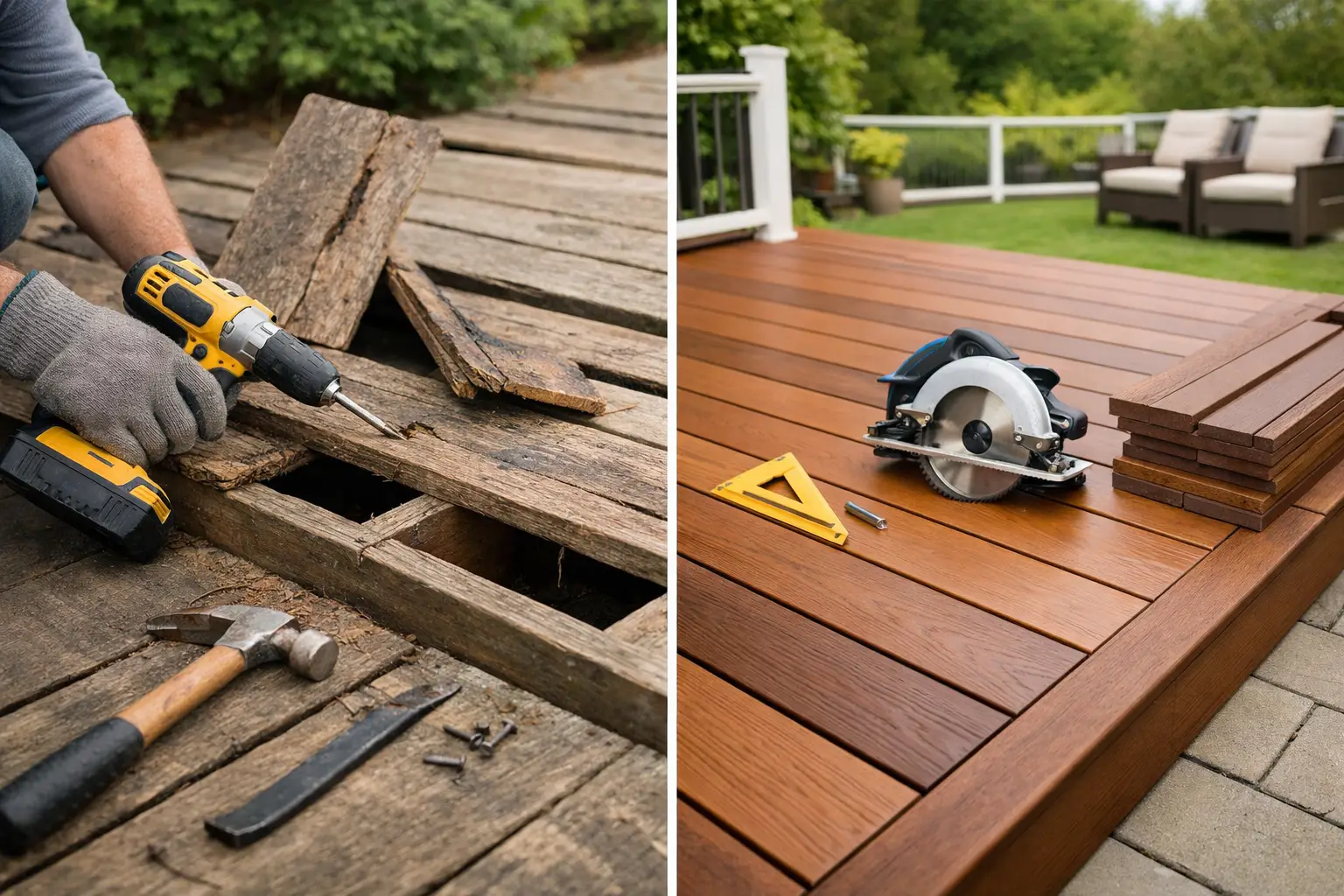
A deck rarely fails all at once. More often, homeowners first notice a soft board near the stairs, a railing that moves more than it should, or fasteners working loose after another stretch of Virginia heat and rain. That is usually when the real question starts: deck repair vs replacement. The right answer depends on safety, cost, age, and how you want to use the space in the years ahead.
If your deck is part of how your family relaxes, entertains, or moves in and out of the house every day, this decision is about more than appearance. It is about protecting your investment and making sure the structure is safe and worth putting money into.
Deck repair vs replacement starts with structure
Cosmetic wear and structural failure are not the same thing. A weathered deck surface can often be repaired. A deck with hidden rot in major framing components may be a very different story.
Repairs usually make sense when the underlying frame is still sound. That might include replacing a handful of cracked or rotted deck boards, securing loose railings, reinforcing a few stair components, swapping out damaged balusters, or correcting isolated areas of surface deterioration. If the ledger board connection is solid, the joists are in good shape, and the posts and footings are doing their job, targeted repairs can extend the deck’s life without the cost of a full rebuild.
Replacement becomes more likely when the problems go deeper than the surface. If rot has spread into joists, beams, posts, or attachment points at the house, patching one area may only delay a larger failure. The same is true if the deck has widespread movement, major settling, outdated construction methods, or multiple safety issues showing up at once.
That is why a visual walkthrough alone does not always tell the full story. A deck can look decent from the yard and still have hidden weaknesses underneath.
When deck repair is usually the better choice
A repair-first approach is often the smart move when the deck is relatively young, the frame is still solid, and the damage is limited to specific areas. For many Richmond-area homeowners, that means correcting wear from moisture exposure, sun damage, and normal use without tearing out a structure that still has years left in it.
For example, if only the top deck boards are splitting and the framing below is dry and stable, resurfacing or board replacement may be all you need. If the stairs are aging faster than the main platform, those can sometimes be rebuilt independently. If railings are no longer secure but the deck frame remains structurally sound, a railing upgrade can improve safety and appearance without requiring full replacement.
Repairs also make sense when your current deck layout still works for your household. If you are happy with the size, location, and general design, investing in strategic fixes can be a practical way to maintain function while controlling costs.
The key is honesty about the scope. Good repair work solves the problem. Temporary patching over widespread deterioration usually costs more in the long run.
Signs your deck may be repairable
There are a few common indicators that a deck can likely be repaired rather than rebuilt. Damage is limited to a small percentage of boards. Railings feel loose but posts remain solid. Stairs show wear in isolated spots. Surface cracks, popped fasteners, or localized rot appear in areas with repeated water exposure, but the main framing is still intact.
Even then, repairs should be based on inspection, not guesswork. What matters is whether the structure beneath the visible damage is still dependable.
When replacement is the safer investment
There comes a point where repair stops being cost-conscious and starts becoming repetitive. If you are replacing board after board, correcting one structural issue only to uncover another, or dealing with an older deck that was not built to current standards, replacement often provides better value.
Age is part of the equation, but not the only factor. Some decks reach the replacement stage because they were built with materials that have simply run their course. Others need replacement because of long-term moisture damage, poor drainage, improper flashing, undersized framing, or years of deferred maintenance.
A full replacement may also make sense when the deck no longer fits how you live. Maybe the layout is too small for entertaining. Maybe the stairs are awkward. Maybe railings are outdated and you want something safer for children or older family members. Maybe you want lower-maintenance materials instead of continuing to repair aging wood every few seasons.
In those cases, replacement is not just about fixing problems. It is a chance to improve usability, safety, and appearance in one coordinated project.
Red flags that point toward replacement
If you notice widespread rot, soft or spongy framing, leaning or shifting, unstable rail posts, significant movement when walking across the deck, or major deterioration where the deck attaches to the home, replacement deserves serious consideration. The same goes for decks with multiple past repairs that still do not feel solid.
A contractor should also look closely at the footings, support posts, beam spans, hardware corrosion, and overall code compliance. Safety has to lead the decision.
Cost is important, but so is timing
Homeowners naturally start with budget, and that is reasonable. Repairs usually cost less upfront than replacement. But upfront cost is not the same as long-term value.
If a repair buys you many more years from a fundamentally sound deck, that is money well spent. If the repair only postpones replacement for a short time, it may not be the better financial decision. Paying for recurring fixes can add up quickly, especially when the deck has layered issues.
Replacement generally costs more at the beginning, but it can reduce maintenance demands, resolve safety concerns more completely, and give you a fresh structure designed for current needs. If you plan to stay in your home for years, the longer view matters.
For homeowners in the Richmond area, weather should be part of the timing conversation too. Heat, humidity, rain, and seasonal temperature swings all take a toll on outdoor structures. Waiting too long on a compromised deck can allow damage to spread, especially if water is already getting into key framing components.
Materials can change the equation
Sometimes the decision is not simply repair or replace. It is whether the deck you have should be repaired in wood or rebuilt with materials that require less upkeep.
If your existing deck is wood and you are tired of sanding, staining, and dealing with repeated board deterioration, replacement may open the door to a lower-maintenance upgrade. Composite decking and modern railing systems can reduce ongoing maintenance while improving appearance and durability.
That said, not every homeowner wants or needs a full material change. If the deck has a solid frame and you are comfortable with the maintenance routine, repairing wood components may still be the best fit. The right choice depends on how long you plan to stay in the home, how much upkeep you want to handle, and what kind of return you expect from the project.
Function matters as much as condition
One of the most overlooked parts of deck repair vs replacement is how the space actually serves your household. A deck can be structurally repairable and still not be worth preserving in its current form.
If you have outgrown the layout, need safer stairs, want better flow to the yard, or are thinking about accessibility for aging family members, replacement can solve more than deterioration. It can turn an underperforming outdoor area into a more useful extension of the home.
This is where a consultation-led approach helps. Instead of focusing only on what is damaged, it helps to ask what you want the deck to do next. Quiet family dinners, larger gatherings, safer access, and easier maintenance all influence the right path forward.
How to make the right call
The best decision usually comes from balancing four things: structural condition, total repair scope, budget, and long-term plans for the home. If the deck is fundamentally sound and the issues are isolated, repair is often the practical answer. If safety concerns are widespread or the deck no longer makes sense for your needs, replacement is often the wiser investment.
A trustworthy contractor should not push you toward the bigger job by default. They should help you understand what is salvageable, what is not, and what each option means for cost, durability, and everyday use. That kind of clarity matters, especially when the project affects both safety and home value.
For homeowners weighing this decision, Old Dominion Innovations understands that the goal is not just to fix boards. It is to protect the way your home functions and make sure the finished result feels solid, safe, and worth the investment.
If your deck has started showing signs of wear, now is the right time to get a clear assessment before a manageable problem turns into a bigger one. The best outdoor spaces are not just attractive from a distance. They feel dependable every time you step onto them.