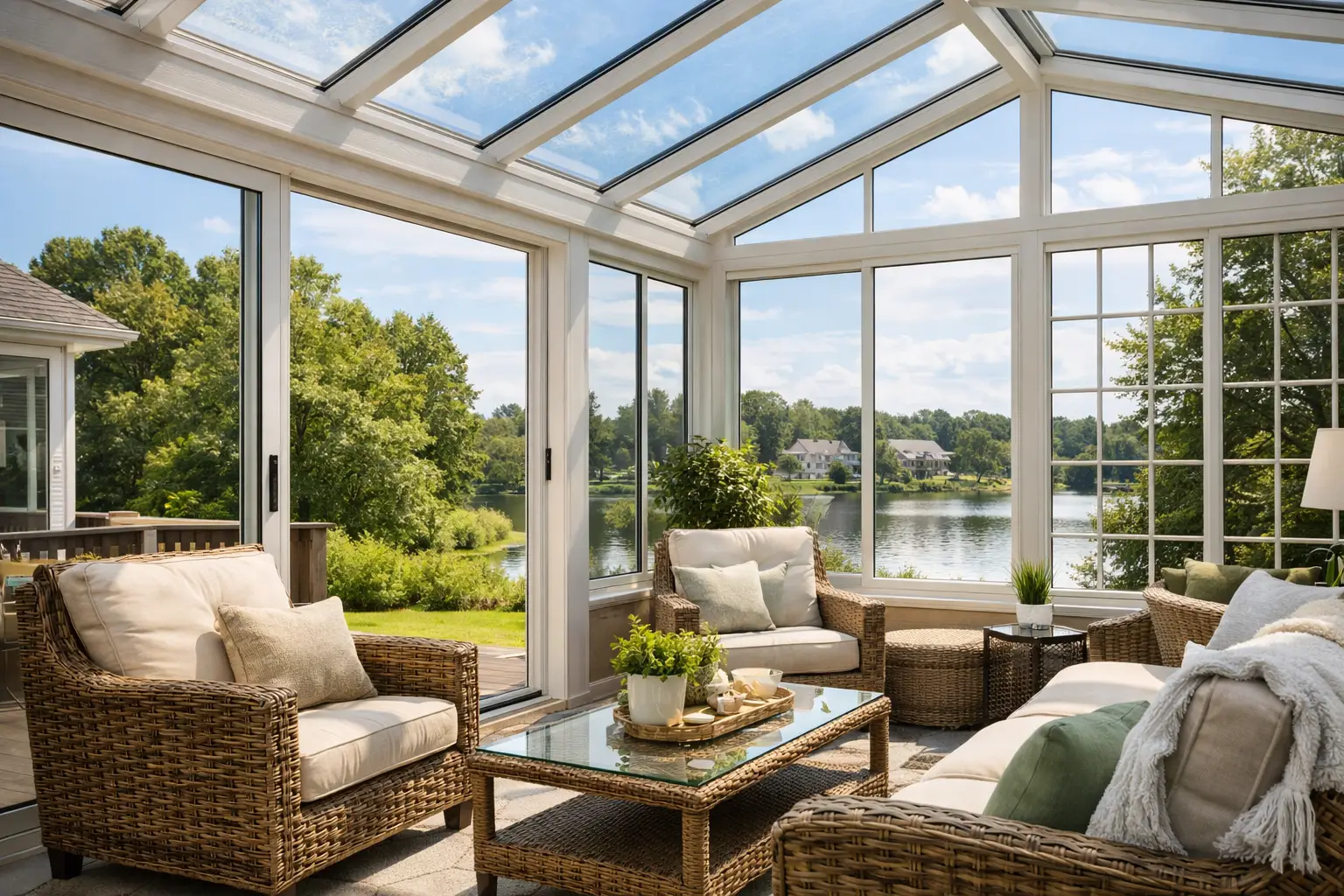
A sunroom can look beautiful on a mild spring afternoon and still fall short when Richmond humidity, summer sun, or a January cold snap arrives. The best sunroom window options are not simply the largest panes of glass or the lowest initial price. They are the windows that fit how you want to use the room, how the space faces the sun, and how much comfort you expect throughout the year.
For many homeowners, window decisions determine whether a sunroom becomes a favorite gathering place or a room that is too hot, too cold, or too bright for much of the day. A thoughtful plan considers insulation, ventilation, durability, views, privacy, and the way new windows connect with the rest of your home.
Start With How You Want to Use the Sunroom
Before comparing frame colors or window styles, decide what the room needs to do. A three-season sunroom used mainly from March through November has different requirements than a four-season room intended for daily family use, entertaining, reading, or working from home.
If you want to heat and cool the space consistently, insulated glass, thermally efficient frames, and properly installed windows should be priorities. Large single-pane windows may offer an appealing price point, but they can transfer heat quickly and make the room harder to manage during Virginia’s hottest and coldest stretches.
A seasonal room may allow more flexibility. You might choose wider operable windows and screens to maximize fresh air, with less emphasis on the same level of insulation needed for a conditioned addition. The right choice depends on your goals, not a one-size-fits-all package.
The Best Sunroom Window Options by Style
Window style affects more than appearance. It changes how air moves through the room, how easily you can clean the glass, and how much unobstructed view you have of the yard.
Picture Windows for Open Views
Picture windows are fixed panes that do not open. They are an excellent option when your priority is a broad view of the garden, deck, pool, or wooded property. Because there are no moving components, fixed windows generally provide strong weather sealing and a clean, streamlined appearance.
Their limitation is ventilation. A sunroom made entirely of picture windows can feel stuffy when the weather is pleasant but the air is still. Many homeowners get the best result by placing picture windows in the main viewing areas and adding operable windows where they can create cross-breezes.
Double-Hung Windows for Familiar Function
Double-hung windows have two vertically sliding sashes. They suit traditional Richmond-area homes well and work naturally in sunrooms designed to feel connected to the original house.
Opening the lower sash allows fresh air in, while lowering the upper sash can help warm air escape. Many modern versions tilt inward for easier cleaning. Double-hung windows do break up the view more than large fixed glass panels, so they are often most effective on side walls rather than the room’s primary focal point.
Casement Windows for Ventilation and Tight Seals
Casement windows are hinged at the side and open outward with a crank. When open, they can catch passing breezes and direct them into the room. When closed, their compression seals can provide very good protection against air and water infiltration.
They are particularly useful in a sunroom that needs dependable ventilation without sacrificing energy performance. Keep exterior clearance in mind, though. Casement windows need room to swing outward and may not be the best fit beside a narrow walkway, deck railing, or heavily used patio area.
Sliding Windows for Practical Access
Sliding windows move horizontally along a track. They are easy to operate, do not project outward, and can be a practical choice where outdoor space is limited. Their simple operation makes them appealing for homeowners who want a low-maintenance, straightforward solution.
The trade-off is that only part of the opening is available for airflow at one time. Quality matters here. A poorly made or poorly installed slider can stick, collect debris in the track, or allow more air leakage than a well-built casement or fixed window.
Awning Windows for Rainy-Day Airflow
Awning windows are hinged at the top and open outward from the bottom. Their design can let in fresh air during a light rain without allowing water directly into the room. They work well higher on a wall, above fixed windows, or in locations where privacy matters.
On their own, awning windows rarely provide the wide views homeowners expect from a sunroom. Used with larger fixed glass, however, they can add useful ventilation while keeping the overall design bright and open.
Glass Matters as Much as Window Style
A window can have an attractive frame and operate smoothly, but the glass package does much of the work when it comes to comfort. In a sunroom, glass selection deserves careful attention because the walls are often made up of far more glass than a typical room.
Double-pane insulated glass is a common starting point for a comfortable, durable sunroom. The space between the panes helps reduce heat transfer compared with single-pane glass. For a room you plan to use year-round, this is generally the practical baseline.
Low-E, or low-emissivity, coatings can help control solar heat gain and reduce ultraviolet exposure. This matters on south- and west-facing walls, where intense afternoon sun can turn a bright room into an uncomfortable one. Low-E glass can also help protect flooring, furniture, and fabrics from fading over time.
Tinted glass may reduce glare and solar heat, but darker glass also changes the look of the room and can limit natural light on cloudy days. It is often a better fit for a particularly exposed wall than for every window in the sunroom. The goal is balance: enough daylight to make the room inviting, without creating a space that demands closed blinds every afternoon.
Choose Frame Materials for Your Priorities
Vinyl frames are popular because they are low maintenance, resist moisture, and can offer good energy performance at a budget-conscious price. For many homeowners, quality vinyl is a practical choice for a sunroom, especially when the design calls for several operable windows.
Aluminum frames can create slimmer sightlines and support larger glass areas. They are often seen in more contemporary sunroom designs. However, aluminum conducts heat more readily than vinyl or wood unless it includes a thermal break, so frame construction is especially important for a conditioned room.
Wood offers warmth and a classic architectural look that can complement older homes and custom additions. It does require more maintenance, particularly in locations exposed to humidity and changing weather. Fiberglass can be another strong option, offering durability and stability with less expansion and contraction than some materials, though it may come at a higher cost.
There is no universally best frame. A homeowner focused on low upkeep may prefer vinyl, while someone matching detailed trim on a historic-style home may find wood or fiberglass worth the investment.
Plan Ventilation Before Construction Begins
Ventilation is easy to underestimate when looking at window samples in a showroom. Once the sunroom is built, it becomes one of the first things you notice. Operable windows placed on opposite walls can create cross-ventilation, helping the room feel fresher during spring and fall.
Ceiling fans, window screens, and carefully located doors also contribute to comfort. If the sunroom will be conditioned, proper HVAC planning should happen early as well. Adding equipment after the room is complete can be more difficult and may lead to less attractive or less effective solutions.
For homes in Richmond, Henrico, Hanover, Mechanicsville, Ashland, and Glen Allen, orientation deserves special consideration. A sunroom with heavy western exposure may need more solar-control glass and shading than one facing north or east. Trees, roof overhangs, nearby structures, and the home’s layout all affect the final recommendation.
Do Not Separate Windows From the Whole Sunroom Design
Windows perform best when they are selected as part of the full construction plan. The roof system, wall insulation, flashing, door placement, foundation, trim, and connection to the existing home all affect whether the room stays dry, comfortable, and attractive over time.
This is why a detailed consultation is more valuable than selecting windows based on a photo or a sale price alone. Proper measurements, an honest discussion of how the room will be used, and clear expectations about budget help prevent costly changes later. Skilled installation is equally important. Even a high-quality window cannot compensate for poor flashing, incomplete sealing, or framing that is not built correctly.
Old Dominion Innovations approaches sunroom projects with that broader view, helping homeowners make practical choices that support comfort, appearance, and long-term value without losing sight of the household budget.
A well-planned sunroom should let you enjoy the changing seasons without constantly negotiating with glare, drafts, or heat. Choose windows for the way your family actually lives, and the room will feel like a natural part of your home rather than an addition you use only when the weather cooperates.