A sunroom should not feel like a room you admire from the kitchen but avoid for half the year. The most useful sunroom design trends are centered on making this space comfortable, flexible, and connected to the way Richmond-area families actually live. That means planning for humid summers, bright afternoon sun, chilly winter mornings, and the everyday needs of a busy household.
For homeowners considering a new sunroom or updating an older enclosed porch, the goal is not to follow every passing style. It is to choose materials, layouts, and details that look polished while adding usable square footage to the home.
Sunroom Design Trends That Prioritize Daily Use
The strongest trend in sunroom design is a move away from spaces that serve one narrow purpose. Instead of treating a sunroom as a seasonal sitting area with wicker furniture, homeowners are designing rooms that can host coffee in the morning, homework in the afternoon, and relaxed gatherings in the evening.
This shift affects every decision, from the flooring underfoot to the amount of electrical service planned for the room. A comfortable sunroom is more likely to become one of the most-used spaces in the house, which makes thoughtful construction and finish selection worth the attention.
Flexible layouts for real family routines
A flexible layout starts with identifying how the room will be used most often. A family that entertains may need comfortable seating, a beverage station, and clear paths to the deck or backyard. Homeowners who want a quiet retreat may prefer a reading chair, built-in storage, and shades that reduce glare without blocking the view.
Multi-purpose furnishings help the room adapt without feeling crowded. A dining table that also works for puzzles or remote work, storage benches near an entry door, and movable accent tables can make a modest footprint work harder. The key is leaving enough open space to move through the room easily, especially when children, pets, or guests are part of daily life.
Indoor-outdoor connections that feel intentional
Large glass doors, expanded window walls, and easy access to a deck or patio remain popular because they make the transition to the outdoors feel natural. In many Richmond homes, a sunroom is the link between the main living area and the backyard. The best designs account for that traffic pattern rather than placing furniture where everyone has to walk around it.
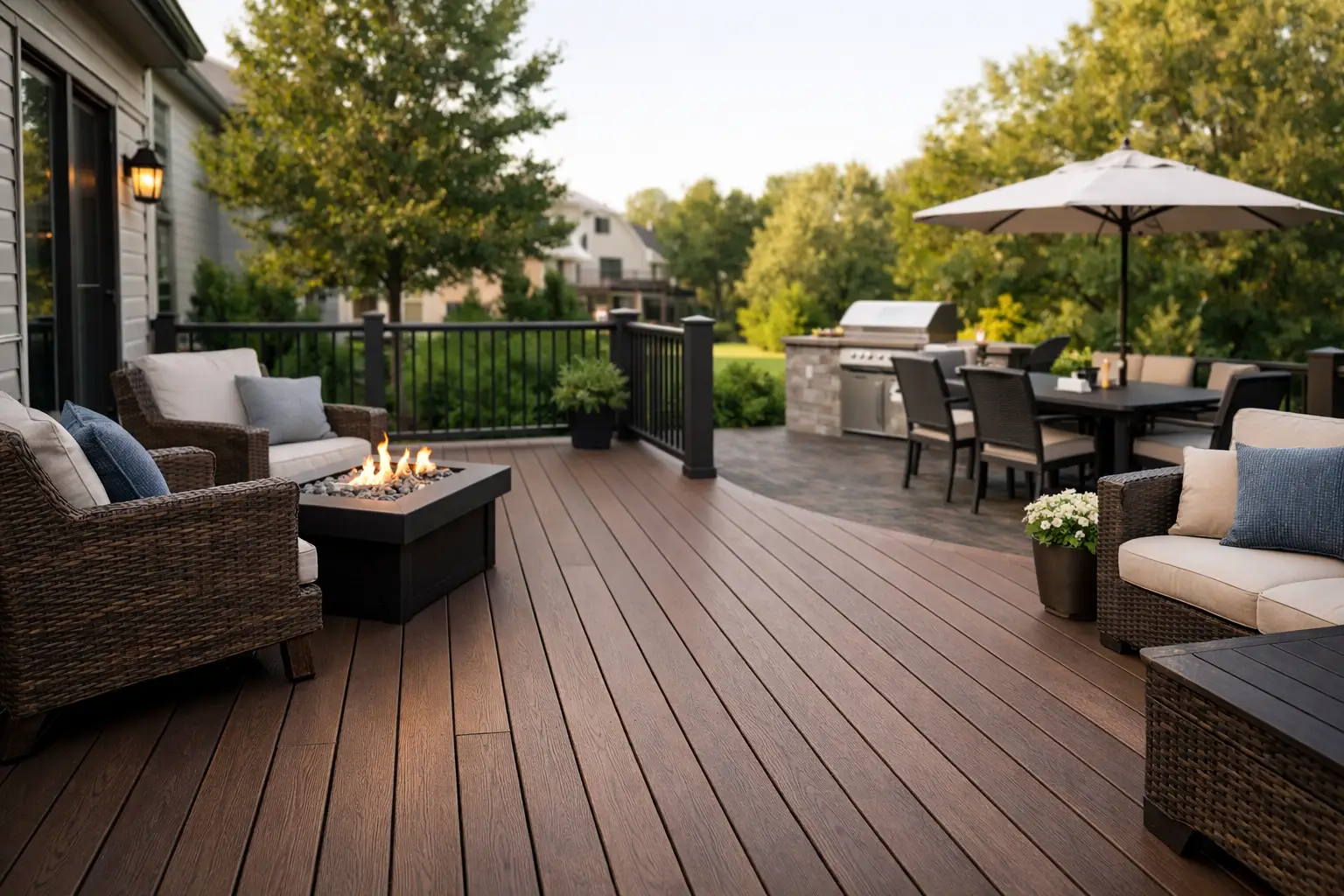
Matching or coordinating finishes can also strengthen the connection. For example, a warm wood-tone ceiling paired with complementary deck materials can make the spaces feel related while still giving each area its own purpose. Exact matching is not always necessary, and it can look forced. A shared color family or repeated accent is often enough.
Comfort Is Driving Modern Sunroom Design
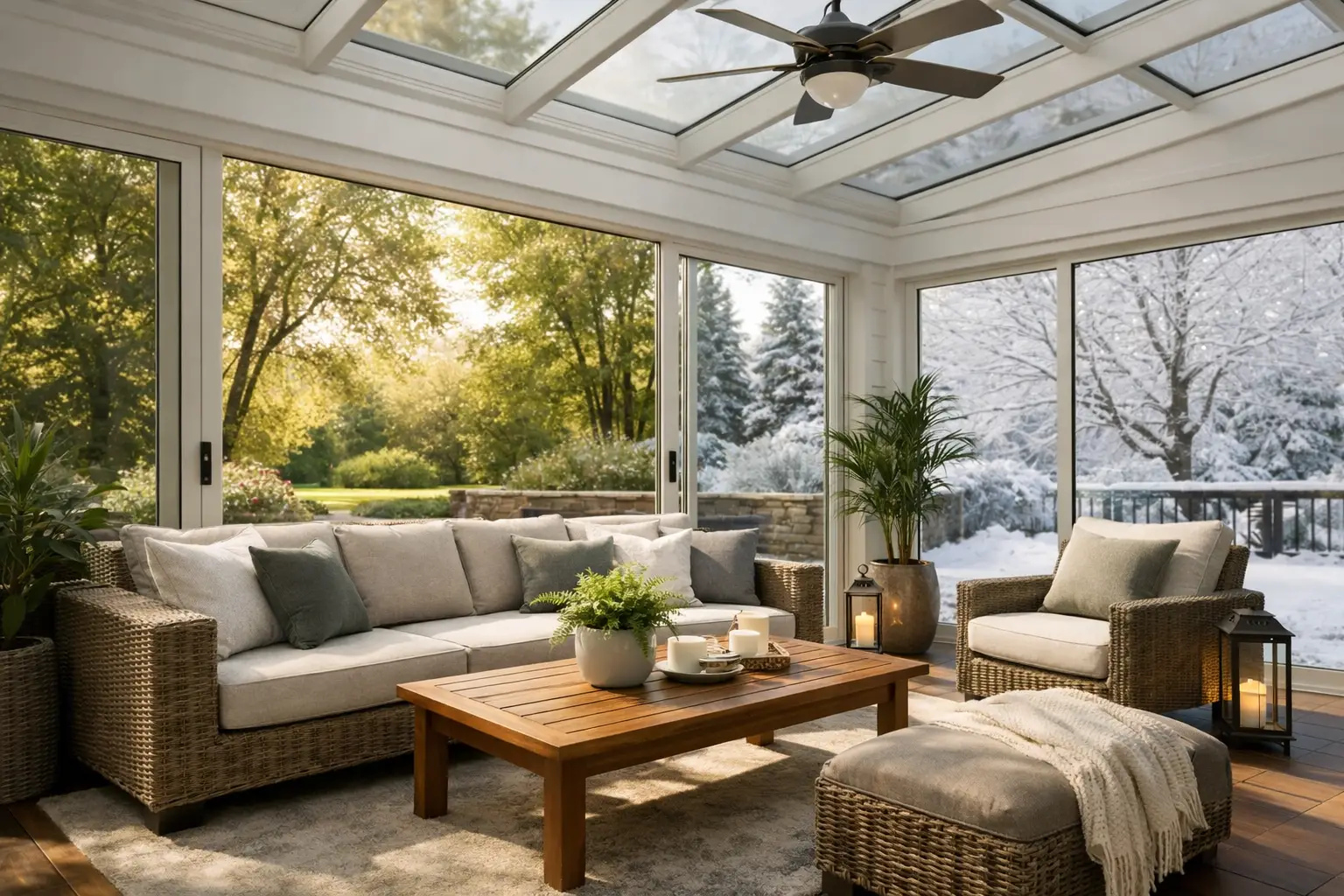
Beautiful glass is only part of the equation. If a sunroom becomes too hot in July or feels cold near the windows in January, homeowners will naturally use it less. Current sunroom design trends put more emphasis on year-round comfort through better glass, insulation, ventilation, and shading.
Energy-efficient glass and proper orientation
Today’s window options can help manage heat gain, UV exposure, and winter heat loss far better than older sunroom systems. The right choice depends on the room’s orientation, surrounding trees, roof design, and how the space will be heated and cooled.
A south- or west-facing room may receive beautiful light but also intense afternoon heat. Low-emissivity glass, properly selected tinting, and insulated framing can help, but they do not eliminate the need for smart planning. A contractor should evaluate the home, sun exposure, and intended use before recommending a window package.
For a room that will be used throughout the year, heating and cooling should be considered early in the design process. Extending an existing HVAC system may work in some homes, while a dedicated ductless unit may be more practical in others. The right answer depends on the home’s existing system, the sunroom’s size, insulation levels, and local code requirements.
Layered shade solutions
Natural light is the reason many homeowners want a sunroom, but uncontrolled light can fade furniture, create glare, and raise indoor temperatures. Rather than covering every window with heavy treatments, many homeowners are choosing layered solutions such as solar shades, light-filtering panels, and operable blinds.
Motorized shades can be a convenient option for tall windows or hard-to-reach areas. They are not essential for every project, but they can be worthwhile when a room gets strong sun at predictable times of day. For a more budget-conscious plan, well-placed manual shades and exterior landscaping may provide the comfort improvement a homeowner needs.
Ceiling fans, lighting, and electrical planning
A ceiling fan remains one of the simplest ways to improve comfort in a sunroom, particularly during Virginia’s humid months. It should be sized for the room and mounted appropriately for the ceiling height. A fan can support air movement, but it is not a substitute for a complete heating and cooling plan.
Lighting is becoming more layered as well. Recessed lights can provide general illumination, while wall sconces, a pendant over a dining table, or lamps near seating areas make the room feel warmer after sunset. Planning outlets, charging locations, and switches before construction is far easier than trying to add them after finishes are complete.
Natural Materials and Durable Finishes
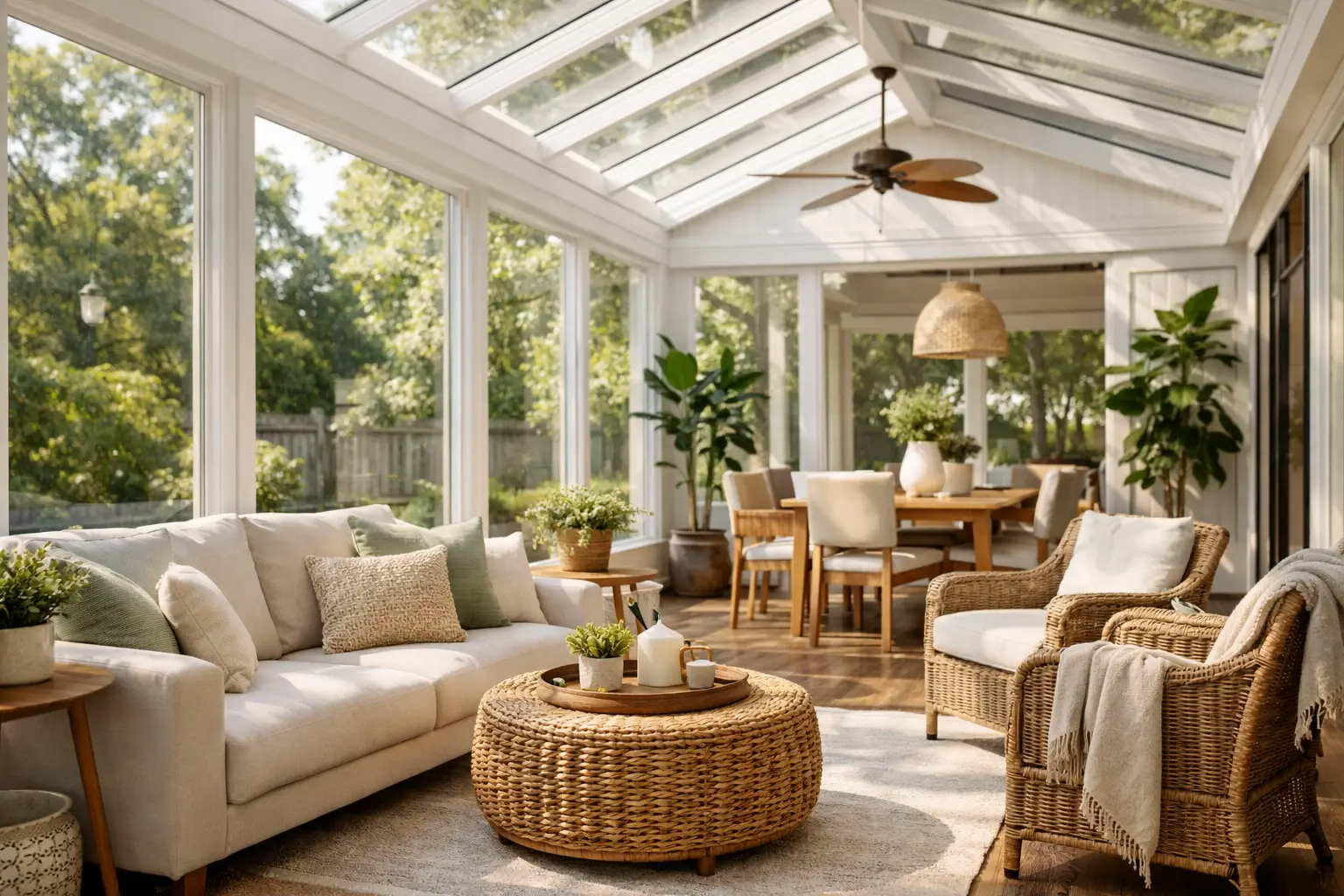
Homeowners are leaning toward finishes that soften all the glass and create a more settled, residential feel. Warm whites, muted greens, sandy neutrals, and natural wood tones work especially well in sunrooms because they reflect the surrounding landscape without competing with it.
Wood-look flooring, luxury vinyl plank, tile, and sealed concrete are common choices for their durability and maintenance advantages. The best floor depends on whether the room will be conditioned, how much moisture it may encounter, and whether it opens directly to a pool, deck, or backyard. Hardwood can be beautiful, but it may not be the most practical choice for every sunroom.
Textured rugs, upholstered seating, woven accents, and washable fabrics can make the space inviting without creating a fragile, high-maintenance room. In a home with pets or young children, performance fabrics and easy-clean surfaces are often a smarter investment than delicate materials that require constant care.
Statement ceilings without excess
A painted beadboard ceiling, stained wood detail, or simple tongue-and-groove finish can bring character to a sunroom without overwhelming the room. This is one area where a little detail goes a long way. Because sunrooms already include visual activity from windows, outdoor views, and furnishings, overly complicated ceiling treatments can make a smaller space feel busy.
Built-Ins and Practical Storage
Storage is not always the first thing homeowners think about in a sunroom, but it can make the room much more functional. Built-in benches can hold blankets, outdoor toys, or gardening supplies. A low cabinet wall can create a place for serving dishes, board games, or pet essentials while keeping the room tidy.
Custom details are most valuable when they solve a specific problem. A family that uses the sunroom as a drop zone after playing outside may benefit from durable flooring and a bench near the door. Someone using the room as a plant-filled retreat may need protected outlets, easy-to-clean surfaces, and adequate drainage planning. The design should follow the household, not a showroom photo.
Plan for the Home You Have, Not Just the Trend You See
A successful sunroom begins with a close look at the existing home. Rooflines, foundation conditions, drainage, door placement, electrical capacity, and local permitting requirements all influence what can be built and what it will cost. A design that looks simple on paper may require significant structural work to integrate properly with the house.
That is why consultation-led planning matters. Homeowners deserve clear conversations about scope, budget, construction timing, and the trade-offs between a three-season room and a fully conditioned addition. A three-season sunroom may be a great fit for families who mainly want spring-through-fall enjoyment. A four-season design generally requires a greater investment, but it can deliver more dependable comfort and broader year-round use.
For Richmond homeowners, the best sunroom is not defined by one trendy finish or a wall of glass. It is the room that fits the home, handles the local climate, and gives the family another comfortable place to spend time together. With careful planning and quality craftsmanship, a sunroom can feel less like an add-on and more like it has always belonged there.